
Pasteurized Picher yeast is one of the methanol-nutritional yeasts that can utilize methanol as its sole carbon and energy source.
Like other yeasts, it exists mainly as a haploid during the asexual growth period, and when the environment is nutrient-limited, it often induces the mating of two physiologically different spliced haploid cells to fuse into a diploid.
Name: Pichia pastoris
Full name: Pasteurized Picrospermum yeast
Function Utilizes methanol as a carbon source and energy source.
This paper will focus on the advantages and disadvantages of Pasteur Picot yeast, the advantages of type A, the production process, commonly used vectors, multiple copies, and purification methods.
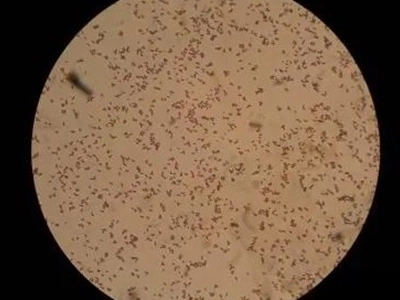
Another biological feature of Pasteur Picot yeast is the regionalization of the alcohol oxidases required for methanol metabolism into peroxisomes by sorting them into peroxisomes.
When glucose is used as a carbon source, there is only one or very few small peroxisomes in the bacterium, whereas when methanol is used as a carbon source, the peroxisomes account for almost 80% of the entire cell volume, and the AOX increases to 35%-40% of the total cell protein.
Therefore, when an exogenous protein gene is inserted in front of the AOX gene using homologous recombination, a large amount of expression can be obtained. Meanwhile, based on this property of methanolic yeast that can form peroxisomes, the system can be used to express some toxic proteins and enzymes that are easily degraded, as well as to study the biogenesis of cell-specific regionalization and its mechanism and function, which can provide insights for similar studies in higher animals.
Exploitation
Koichi Ogata et al. first discovered in 1969 that certain yeasts could utilize methanol as a carbon and energy source for growth (Ogata, et a1.1969 ), and since then the potential for producing single-cell proteins from methanol-utilizing yeasts for use in animal feeds has attracted widespread attention.
The expression of hepatitis B surface antigen (HbsAg) by methanol-nutritional yeast was first reported by Cregg et al. in 1987, and collaborative development of the Picrosystem was subsequently initiated.In 1993, Philip Petroleum sold the patent for the Picrosystem to Research Corporation In 1993, Philip Petroleum sold the patent for the Picrosystem to Research Corporation Technologies, Inc. and commissioned Invitrogea, Inc. to market the product.
Advantages and disadvantages
There is no natural plasmid in Saccharomyces cerevisiae Pichia. pastoris, so the expression vector needs to undergo homologous recombination with the host chromosome, and integrate the exogenous gene expression framework into the chromosome in order to realize the expression of the exogenous gene.
These include the promoter, cloning site of the exogenous gene, termination sequence, screening marker, etc. The expression vectors are all shuttle plasmids. Expression vectors are shuttle plasmids that are first replicated and amplified in E. coli and then introduced into host yeast cells. In order for the product to be secreted extracellularly, the expression vectors also need to carry a signal peptide sequence.
Advantages of type A
(1)It has the promoter of alcohol oxidase AOX1 gene, which is one of the strongest and most stringent promoters with the most stringent regulatory mechanism;
(2) High expression efficiency, its expression of exogenous proteins can account for more than 90% of the total expressed proteins, which is conducive to the isolation and purification of target proteins;
(3) High density culture can be realized in simple synthetic medium;
(4)The expression plasmid can be stably integrated in the form of single copy or multi-copy at the specific site of genome;
(5) Since the yeast can use methanol as a carbon and energy source, while most microorganisms cannot use methanol as a carbon source, it can reduce pollution.
Production process
(1) Cell proliferation and multiplication;
(2) Transitional phase of batch flow addition (glycerol or glucose);
(3) Induced expression phase (methanol);
The carbon source in each stage is a limiting substrate, and the kinetic modeling of its replenishment rate is the basis for efficient expression.
Commonly used vectors
A typical Pasteur Picot yeast expression vector vector contains the promoter and transcriptional terminators (5’AOX1 and 3’AOX1) of the Alcohol Oxidase-1 (AOX1) gene, which are separated by a Multiple Cloning Site (MCS), where the exogenous gene can be inserted.
This vector also contains a selection marker for the histidinol dehydrogenase gene (HIS4) and the 3’AOX1 region. When the integrative vector transforms the recipient, its 5’AOX1 and 3’AOX1 can recombine with homologous genes on the chromosome, so that the whole vector together with the exogenous gene is inserted into the recipient chromosome, and the exogenous gene is expressed under the control of the 5’AOX1 promoter. Bichiria yeast itself does not secrete endogenous proteins, and the secretion of exogenous proteins requires the presence of a signal sequence that directs secretion.
The two commonly used Picrosporum host bacteria are GS115 and KM71, both of which have the HIS4 nutrient-deficient marker. Among them, strain GS115 has the AOX1 gene and is Mut+, i.e., methanol-utilizing normal type, while strain KM71 has the AOX1 locus inserted by the ARG4 gene and has the phenotype Muts, i.e., methanol-utilizing slow type, and both strains are suitable for general yeast transformation methods.
Multi-copy
Unlike replicating plasmid-based expression vectors, the copy number of integrated expression vectors can vary greatly. Expression strains containing multiple copies of the exogenous gene also synthesize more protein. In vivo integration can screen for possible multicopy insertions through high genistein resistance, while in vitro integration can produce tandem insertions of exogenous genes through ligation.
Multi-copy expression strains are obtained in two ways: one is natural screening among a large number of transformants using SDS-PAGE electrophoresis, immunohybridization, or colony spot hybridization methods. Expression strains with high yield are obtained. The other is to insert multiple copies of the expression cassette into a single vector before transformation, and then integrate it into the recipient chromosome by exchange.
Purification method
Proteins expressed in yeast system are generally active, so milder purification methods are used to purify the target proteins. Secretory-expressed proteins are favorable for purification, and can be precipitated with ammonium sulfate and then further purified by ion exchange, gel filtration chromatography, hydrophobic chromatography and other methods. Specific methods and operations should be selected according to the nature of the target protein being processed.