
On January 22, 2024, Nature released 7 technologies worth paying attention to in 2024. Among them, the advancement of artificial intelligence is the core of many technological innovation fields.
◆Deep learning for protein design
Twenty years ago, David Baker’s lab at the University of Washington in Seattle achieved a landmark feat: using computational tools to design an entirely new protein from scratch: the Top7 protein. But the protein is unable to perform any meaningful biological function.
Today, de novo protein design is well established for the generation of customized enzymes and other proteins. These advances are largely due to data sets linking protein sequence to structure. Among them, complex deep learning methods are crucial.
Sequence-based methods can build and adapt existing protein features to form new frameworks, but they are less effective for the custom design of structural elements or features, such as the ability to bind a specific target in a predictable manner. Structure-based methods are better suited for this, and 2023 also saw significant progress in this type of protein design algorithms. Some of the most complex models use “diffusion models”. This model is also the basis for image generation tools such as DALL-E. These algorithms are initially trained to remove computer-generated noise from large numbers of real structures; by learning to distinguish between realistic structural elements and noise, they gain the ability to form biologically plausible, user-defined structures.
The RFdiffusion software developed by the Baker Laboratory and the Chroma tool developed by Generate Biomedicines exploit this strategy to remarkable effect. For example, Baker’s team is using radiofrequency diffusion to engineer novel proteins that form tight interfaces with targets of interest, resulting in “fully surface-conforming” designs. Iterations of RFdiffusion allow designers to computationally shape proteins around non-protein targets such as DNA, small molecules and even metal ions. The resulting multifunctionality opens new horizons for engineering enzymes, transcriptional regulators, functional biomaterials, and more.
◆Large DNA inserts
In late 2023, U.S. and U.K. regulators approved the first CRISPR-based gene-editing therapies to treat sickle cell disease and transfusion-dependent beta thalassemia.
Precisely and programmably inserting large DNA sequences is difficult, but emerging solutions could allow scientists to replace critical segments of defective genes or insert fully functional gene sequences. Le Cong, a molecular geneticist at Stanford University in California, and colleagues are exploring single-stranded annealing proteins (SSAP), a virus-derived molecule that mediates DNA recombination and can precisely target the insertion of up to 2 KB of DNA into the human genome. middle.
Other methods selectively recruit enzymes to precisely splice large DNA fragments into the genome. For example, in 2022, MIT genome engineers Omar Abudayyeh and Jonathan Gootenberg and colleagues described for the first time programmable addition via site-specific targeting elements (PASTEs), which can precisely insert up to 36 KB DNA approach.
Researchers led by Gao Caixia of the Chinese Academy of Sciences developed PrimeRoot, which can achieve efficient and precise site-specific insertion of large fragments of DNA up to 11.1 kb by systematically integrating optimized guided editing tools and site-specific recombinase systems. This technology will be based on Gene stacking provides strong technical support for plant molecular breeding and plant synthetic biology research.
◆Brain computer interface
Stanford University neuroscientist Francis Willett and colleagues from the US BrainGate Alliance developed a brain-computer interface (BCI) device to track neuronal activity by implanting electrodes in the brain of patient Pat Bennett, and then trained a deep learning algorithm to convert these signals into speech . After weeks of training, Bennett was able to speak up to 62 words per minute and have a vocabulary of 125,000 words, more than twice the vocabulary of the average English speaker.
The researchers also applied artificial intelligence-based language models to speed up the interpretation of what patients were trying to communicate—essentially the brain’s “autocomplete.”
This is a central part of Willett’s study and 11 other studies by a team led by UCSF neurosurgeon Edward Chang. In the latter effort, BCI enabled a woman who was unable to speak due to a stroke to communicate at a rate of 78 words per minute, five times faster than the woman’s previous speech assistance.
Additionally, in 2021, University of Pittsburgh researchers implanted electrodes into the motor and somatosensory cortex of quadriplegics to provide fast, precise control of robotic arms as well as tactile feedback; independent clinical studies by researchers at BrainGate and UMC Utrecht in the Netherlands And a Synchron trial is also underway to test a system that would allow paralyzed people to control computers—the first of its kind to allow paralyzed people to control computers.
◆Super resolution
Stefan Hell, Eric Betzig and William Moerner were awarded the 2014 Nobel Prize in Chemistry for breaking the “diffraction limit” that limits the spatial resolution of optical microscopy. Since then, the field has grown rapidly.
Hell’s team at the Max Planck Institute for Multidisciplinary Science in Göttingen, Germany, first forayed into this field in late 2022, using a method called MINSTED that can resolve individual fluorescent tags with an accuracy of 2.3 angstroms.
Ralf Jungmann’s team, a nanotechnology researcher at the Max Planck Institute for Biochemistry in Planegg, Germany, described in 2023 a strategy in which individual molecules are tagged with different DNA strands. These molecules are then detected with dye-labeled complementary DNA strands that bind briefly but repeatedly to the corresponding target, allowing the distinction of individual fluorescent “blinking” spots that would blur into a single spot if imaged simultaneously. This resolution-enhanced sequential imaging (RESI) approach resolves individual base pairs along a DNA strand, demonstrating angstrom-scale resolution with standard fluorescence microscopy.
The one-step nanoscale extension (ONE) microscopy method developed by a team led by neuroscientists Ali Shaib and Silvio Rizzoli at the University Medical Center Göttingen does not quite achieve this level of resolution. However, ONE microscopy can directly image the fine structural details of individual proteins and multi-protein complexes, both isolated and in cells.
◆Cell atlas
Various cell atlas initiatives continue to progress, driven by advances in single-cell analysis and spatial omics methods.
The Human Cell Atlas (HCA) project was launched in 2016 by cell biologist Sarah Teichmann at the Wellcome Sanger Institute in Hinxton, UK, and Aviv Regev, currently head of research and early development at biotech company Genentech. Composed of approximately 3,000 scientists from nearly 100 countries, it works using tissue from 10,000 donors.
The work described above is driven in part by the development and rapid commercialization of analytical tools capable of decoding molecular content at the single-cell level. For example, Snyder’s group frequently uses 10X Genomics’ Xenium platform for spatial transcriptomics analyses. The platform can simultaneously examine the expression of approximately 400 genes in 4 tissue samples per week; Akoya Biosciences’ PhenoCycler platform enables the team to track large numbers of proteins in a format that supports 3D tissue reconstruction at single-cell resolution; other multi-omics approaches enable scientists to Ability to simultaneously analyze multiple molecular categories in the same cell, including RNA expression, chromatin structure, and protein distribution.
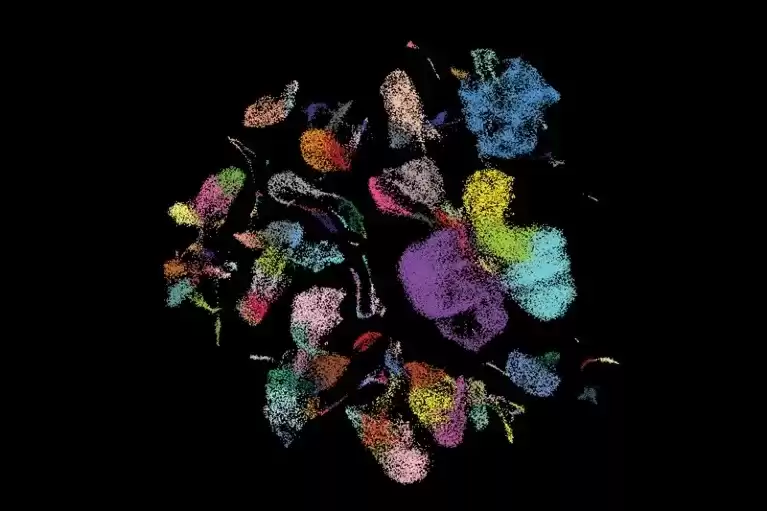
Over the past year, dozens of studies have demonstrated advances in using these techniques to generate organ-specific maps. For example, in June 2023, HCA released a comprehensive analysis of 49 data sets on human lungs.
But there’s still a lot of work to be done. Teichmann estimates that HCA will take at least five years to complete. Teichmann predicts using the atlas data to guide tissue- and cell-specific drug targeting. Snyder said the atlas could be used to understand how the cellular microenvironment informs the risk and risk of complex diseases such as cancer and irritable bowel syndrome. Cause.
◆3D printing nanomaterials
Scientists have made considerable progress in creating nanomaterials over the past few years.
One is speed. Sourabh Saha, an engineer at the Georgia Institute of Technology in Atlanta, says using photopolymerization to assemble nanostructures is about three orders of magnitude faster than other nanoscale 3D printing methods. This may be good enough for laboratory use, but too slow for large-scale production or industrial processes. In 2019, Saha and Shih-Chi Chen, a mechanical engineer at the Chinese University of Hong Kong, and colleagues showed that they could speed up polymerization by using patterned 2D light sheets instead of traditional pulsed lasers. “This increases the rate by a factor of a thousand and still maintains 100-nanometer properties.”
Another challenge is that not all materials can be printed directly via photopolymerization, such as metals. But Caltech materials scientist Julia Greer has developed an ingenious workaround. In 2022, she and colleagues described a method that uses photopolymerized hydrogels as microtemplates; they are then infused with metal salts and treated in a way that induces the metals to take on the templated structure and simultaneously shrink. Although the technique was originally developed for micron-scale structures, Greer’s team is also applying this strategy to nanofabrication
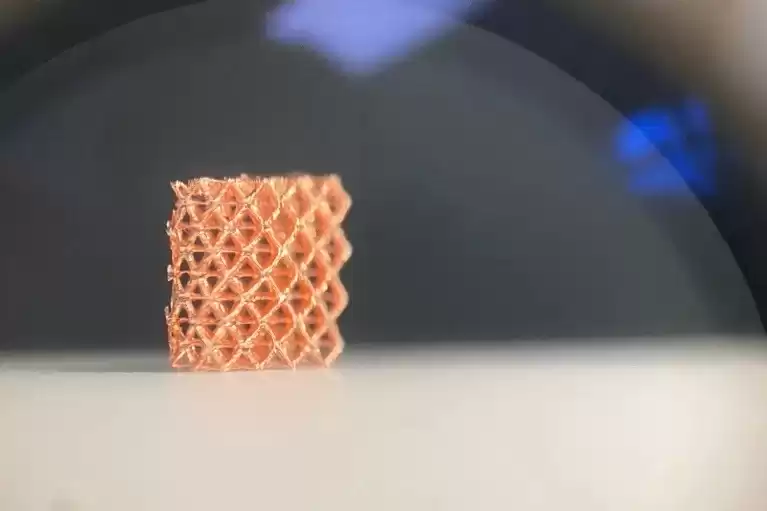
The third is cost. According to Saha, the pulsed laser-based systems used in many photopolymerization methods cost up to $500,000. But cheaper alternatives are emerging. For example, physicist Martin Wegener of the Karlsruhe Institute of Technology in Germany and his colleagues have explored continuous lasers that are cheaper, more compact and consume less power than standard pulsed lasers. Greer has also launched a startup to commercialize a manufacturing process for nanostructured metal sheets that could be used in applications such as next-generation body armor or ultra-durable and impact-resistant outer layers for aircraft and other vehicles.
◆Deepfake detection
The explosion of publicly available generative artificial intelligence algorithms makes it simple to synthesize convincing yet completely artificial images, audio, and videos. But with multiple geopolitical conflicts and other factors, opportunities abound for “weaponized” media manipulation.
Siwei Lyu, a computer scientist at the University at Buffalo in New York, said he has seen a flood of AI-generated “deepfake” images and audio related to the Israel-Hamas conflict. This is just the latest round in a high-stakes cat-and-mouse game in which artificial intelligence users create deceptive content and Lyu and other media forensics experts work to detect and intercept it.
One solution is for generative AI developers to embed hidden signals in the model’s output, thereby creating a watermark of the AI-generated content. Other strategies focus on the content itself. For example, some processed videos replace the facial features of one public figure with those of another, and the new algorithm can identify artifacts at the boundaries of the replaced features.
Second are implementation challenges. The U.S. Defense Advanced Research Projects Agency’s Semantic Forensics (SemaFor) program has developed a useful toolbox for deepfake analysis, but, as Nature has previously reported , it is not routinely used by major social media sites. Expanding access to such tools may help promote their use.