
Preface
Lutein is the main pigment in the macula of the retina of the human eye. Lutein has an important protective effect on the macula in the retina and is a key nutrient that helps the healthy development of the eyes. The human body cannot synthesize it by itself and must rely on the intake of lutein to supplement it. If the eyes lack lutein, it will cause macular degeneration and blurred vision, and even symptoms such as vision degeneration, myopia, and retinopathy. In severe cases, it can lead to blindness.
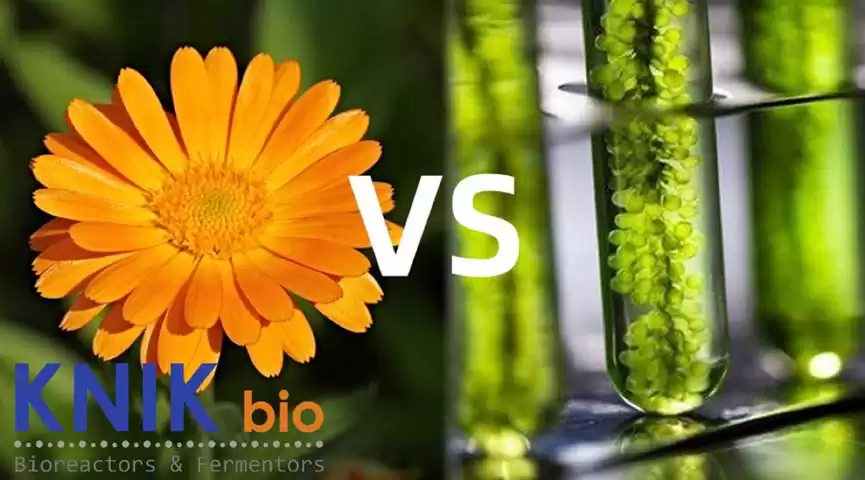
Currently, calendula is the main source of commercial lutein production. However, factors such as high planting costs and harsh growing environments essentially limit the further development and utilization of natural lutein. In contrast, microalgae have the characteristics of fast growth, high lutein content, and simple cultivation environment requirements, and are considered to be the most ideal source of natural lutein.
Chlorella sorokiniana has become a commercially promising lutein biosynthetic strain due to its excellent production efficiency and adaptability to different nutritional modes and a wide range of culture conditions.
Recently, Mr. Xie Youping, associate researcher at the School of Biological Sciences and Engineering of Fuzhou University, published the latest research results “High-cell-density heterotrophic cultivation of microalga Chlorella sorokiniana FZU60 for achieving ultra-high lutein” in the journal “Bioresource Technology” with an impact factor of 11.4 production efficiency”.In this study, researchers used heterotrophic culture methods to achieve efficient production of lutein by Chlorella FZU60, and finally scaled up the culture in a 5L bioreactor (KNIK Bio).
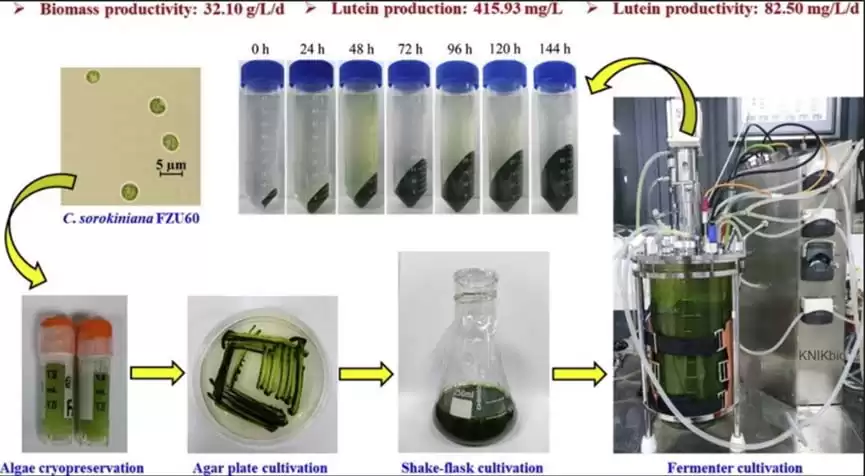
The results showed that by optimizing the nutrient composition and concentration during the feeding stage,the yield and production rate of lutein reached a maximum of 415.93 mg/L and 82.50 mg/L/d.This study proposes a heterotrophic culture method in algae cells through a fed-batch culture strategy, which can significantly improve the production performance of lutein and has great potential for industrial application.
Research Route
#1 Process curve of heterotrophic growth performance of Chlorella FZU60 in shake flasks
As shown in Figure 1a, Chlorella FZU60 was in the adaptation stage during 0-24 h, with a low biomass production rate. It entered the logarithmic growth phase at 24-58 h, and the algal biomass concentration (5.04 g/L) and productivity (2.04 g/L/d) reached the peak at 58 h. After 58 h, both biomass concentration and production rate decreased, which may be due to the depletion of carbon and nitrogen sources at this time (Fig. 1c), which affected the C/N metabolism of the cells and hindered the growth of algal cells.
As shown in Figure 1b, the lutein content increased with the prolongation of incubation time and reached the highest level (4.09 mg/g) at 120 h. When the carbon and nitrogen sources in the culture medium are almost exhausted, lutein continues to be synthesized. It can be inferred that the synthesis of lutein does not require the available nitrogen and carbon sources in the culture solution.
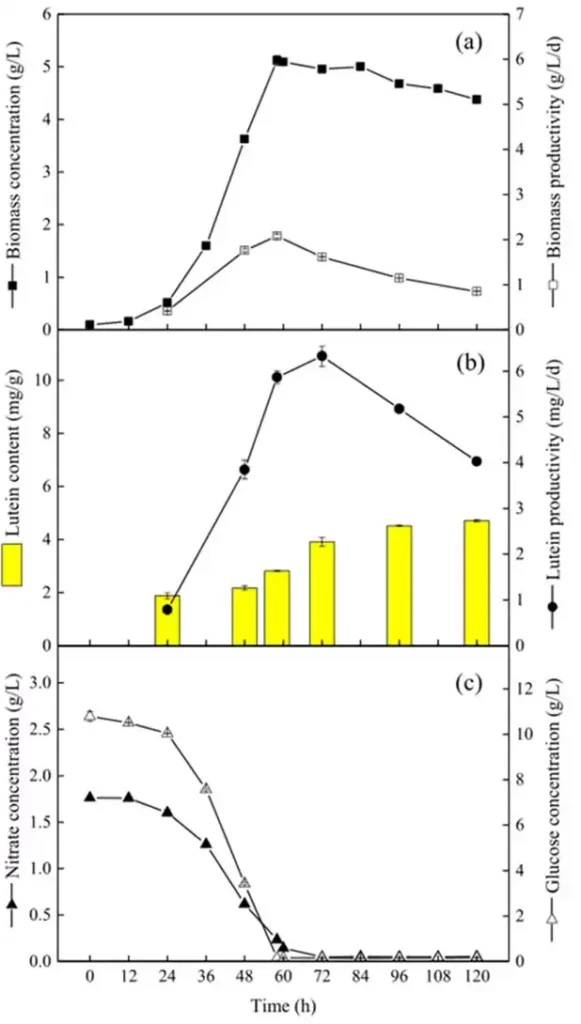
Figure 1 Time course of heterotrophic performance of Chlorella FZU60 in shake flasks
(a) Biomass concentration and productivity
(b) Lutein content and productivity
(c) Nitrate and glucose concentrations
#2 Effect of initial cell concentration (ICC) on heterotrophic growth of Chlorella FZU60 in shake flasks
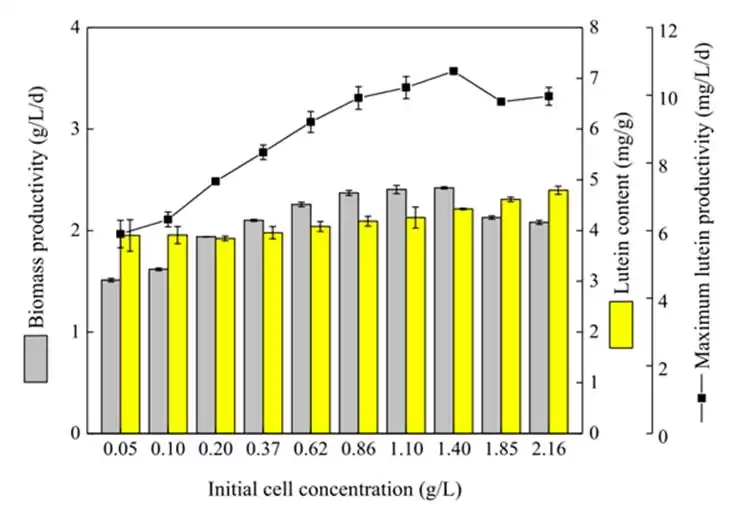
Figure 2 Effect of initial cell concentration on heterotrophic lutein production in Chlorella FZU60
As shown in Figure 2, as the ICC increases, the biomass production rate of Chlorella FZU60 first increases and then decreases, reaching a maximum value of 2.42 g/L/d when the ICC is 1.40 g/L, and the lutein content decreases from 3.90 mg/g gradually increased to 4.79 mg/g, and the maximum lutein production rate reached the highest, which was 10.71 mg/L/d. This shows that increasing ICC within a certain range is beneficial to improving the heterotrophic growth rate of algal cells and the production of lutein. Therefore, the optimal ICC for heterotrophic production of lutein was determined to be 1.40 g/L.
#3 Effect of culture temperature on heterotrophic growth of Chlorella FZU60 in shake flasks
As can be seen from Figure 3, the biomass production rate, lutein content and lutein production rate of Chlorella FZU60 increased significantly after the culture temperature increased from 20°C to 30°C. At 30°C, the The biomass, lutein content and production rate of Chlorella reached the highest, and then decreased as the temperature further increased to 40°C, indicating that the optimal culture temperature for the heterotrophic growth of Chlorella FZU60 was 30°C.
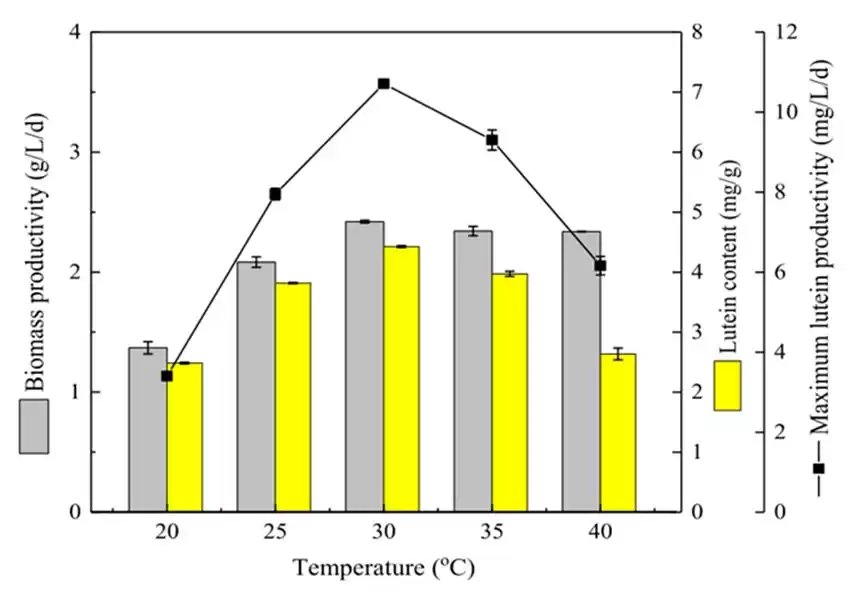
Figure 3 Effect of temperature on heterotrophic lutein production in Chlorella FZU60
#4 Nutritional component-based fed-batch strategy for improving lutein production in 5L fermenters
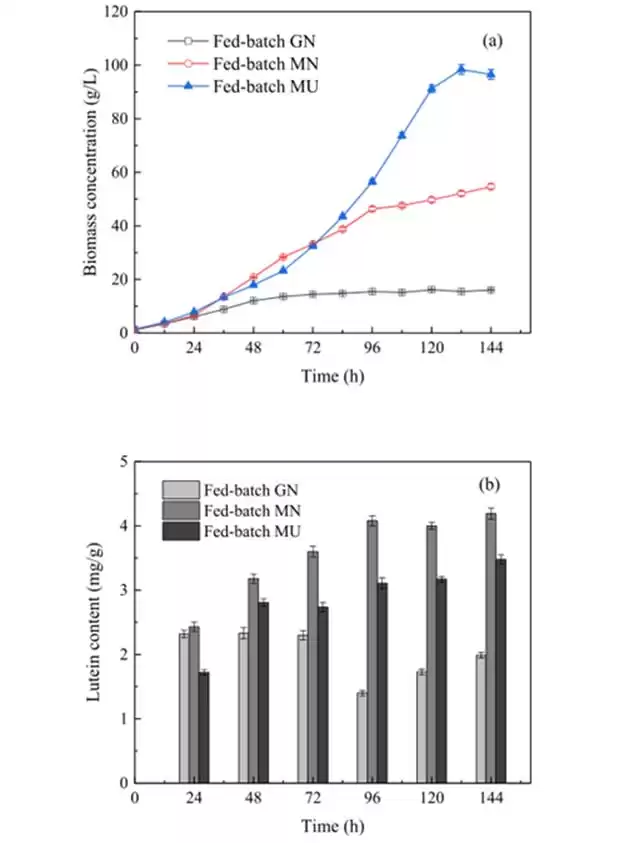
Figure 4 Effects of different feeding strategies based on nutritional components on Chlorella FZU60 fermentation culture medium (a) biomass concentration and (b) Lutein content
In order to further improve the heterotrophic culture performance of Chlorella FZU60, three fed-batch strategies based on nutrient composition were studied (fed-batch GN: concentrated glucose (500 g/L) and nitrate (175 g/L) ; Feeding batch MN: The concentrated medium uses nitrate as the nitrogen source; Feeding batch MU: The concentrated medium uses urea as the nitrogen source). As shown in Figure 4a, the maximum biomass concentrations of the fed batches GN, MN, and MU were 16.07, 54.71, and 98.40 g/L, respectively. The biomass concentration of the fed batch MU was significantly higher than that of the fed batches GN and MN. The biomass production rate of the fed batch MU reached 17.96 g/L/d, which was 231.98% and 59.36% higher than the fed batches GN and MN respectively (Table 1).
Table 1 Comparison of heterotrophic performance of Chlorella FZU60 under feeding strategies based on different nutritional components
As shown in Figure 4a, the lutein content of the fed batches MN and MU gradually increased from 24 h to 96 h, with little change after 96 h, while the lutein content of the fed batch GN increased from 24 to 72 h. It was about 2.30 mg/g at first, and then dropped sharply. The most noteworthy thing is that the lutein content of fed batch MN always exceeds that of fed batches GN and MU, and the order is fed MN > fed MU > fed GN.
However, due to the higher biomass concentration and productivity, the lutein yield and productivity of the fed batch MU reached 289.20 mg/L and 56.93 mg/L/d, respectively, which was higher than that of the fed batches GN and MN (Table 1) . In summary, fed-batch MU is a very effective feeding strategy to improve the heterotrophic growth performance of Chlorella FZU60.
#5 Batch feeding strategy for efficient lutein production in 5 L fermenters based on nutrient concentration

The results of research on feeding strategies based on different nutritional components show that compared with feeding GN and MN, feeding MU has higher lutein yield and productivity. Next, using urea as the nitrogen source, three medium feeding strategies with different nutrient concentrations were studied (feeding batch 1F: concentrated 1 times; feeding batch 3F: concentrated 3 times; feeding batch 6F: concentrated 6 times).
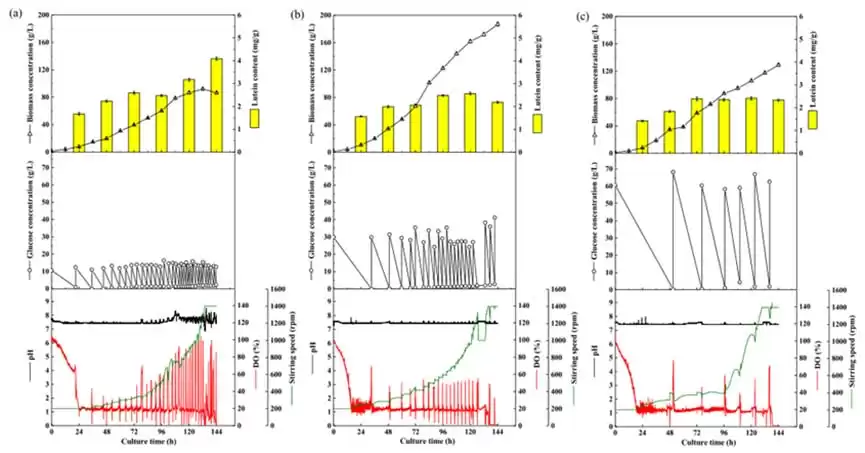
Figure 5 Effect of different feeding batch strategies based on nutrient concentration on Chlorella FZU60 fermentation culture broth.
(a) Feed batch 1F
(b) Feed batch 3F
(c) Feed batch 6F
As shown in Figure 5, the maximum biomass concentration of fed batch 3F reached 186.86 g/L at 144 h, which was 102.76% and 44.83% higher than fed batches 1F and 6F respectively, and the order was fed 3F > fed Material 6>Add material 1F. During the entire culture process, the lutein content of fed batch 1F gradually increased from 1.67 mg/g to 4.09 mg/g. The lutein content was higher than that of the fed-batch 3F and 6F strategies, indicating that low concentrations of nutrients are beneficial to the accumulation of lutein in algal cells. This may be due to stress effects caused by periodic and frequent confinement of the substrate. However, fed batch 3F obtained extremely high biomass concentration (161.82 g/L), biomass production rate (32.10 g/L/d), lutein production (415.93 mg/L) and lutein production rate (82.50 mg/L/d) (Table 2), which were 51.88%, 63.17%, 52.98% and 63.79% higher than the 1F/6F feed batch respectively.

References:Xie Y, Zhang Z, Ma R, et al. High-cell-density heterotrophic cultivation of microalga Chlorella sorokiniana FZU60 for achieving ultra-high lutein production efficiency. Bioresource Technology. 2022 Dec; 365:128130. doi: 10.1016/j.biotech.2022.128130.
About experimental equipment
The reactor mentioned in the article is the KNIKBIO A/B/Q series desktop fermentation tank from KNIK Biotechnology (Figure 6, Figure 7).
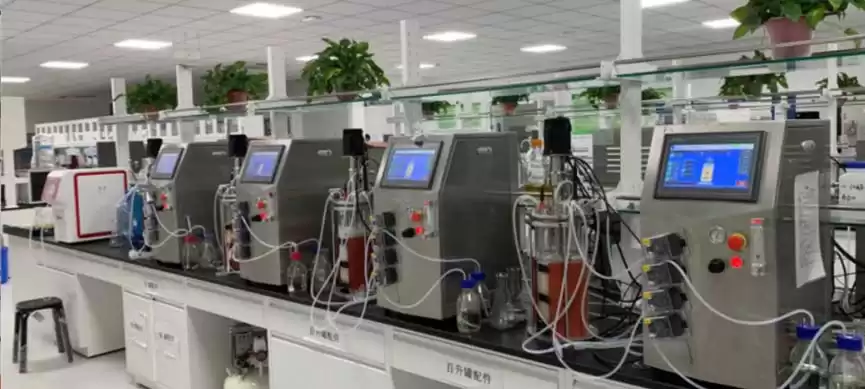
Figure 6 KNIKBIO A desktop fermenter
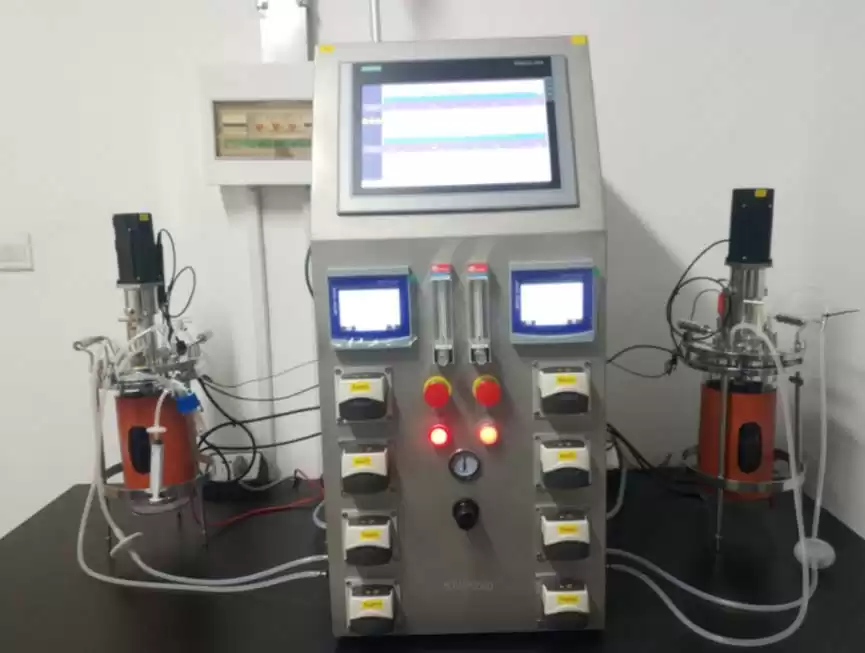
Figure 7 KNIKBIO B desktop fermenter
The volume of the reactor tank (glass, disposable) covers 3L-15L, which not only meets the high-density culture ofbacteria and fungi, but can also be used for chlorella (Chlorella soroiniana), Chlamydomonas reinhardtii (Chlamydomonas reinhardtii), and Haematococcus pluvialis. High-density culture ofmicroalgae plant cellssuch as Haematococcus Pluvialis (Figure 6c).
In addition, in order to meet the photoautotrophic, heterotrophic and mixotrophic modes of microalgae plant cells, KNIK Bio has upgraded this series of bioreactors and developed the T&J-Lux A stirred light bioreactor (Figure 7).
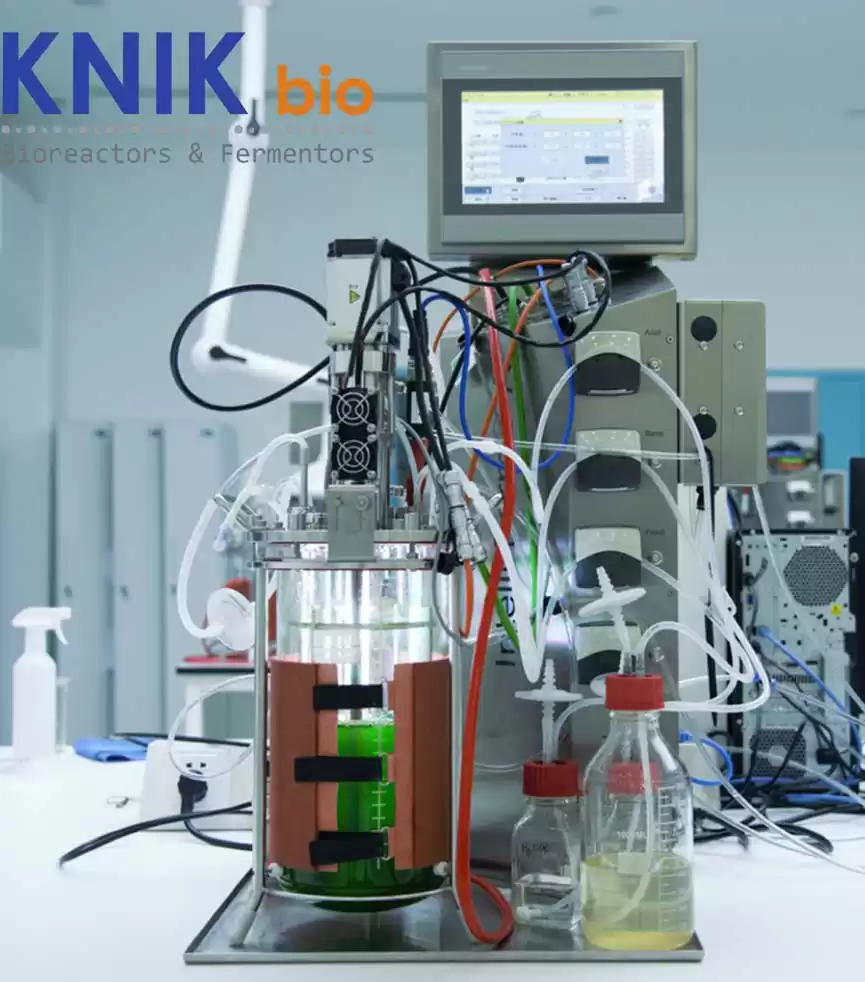
Figure 7 KNIK A stirred light bioreactor
The reactor has built-in light sources of three different colors: red, blue, and green, which can achieve a maximum light intensity of 50,000 Lux. The software system that matches the hardware integrates a step-by-step design of light levels, which can perform gradient adjustment of light parameters and cyclic control of the light-dark ratio to meet the requirements of different microalgae plant cells for light color categories, light-color ratios, light intensity, and light-darkness. Adjustment of process parameters such as cycles.