
◆Overview
Scale down: Large-scale fermentation production conditions serve as small and medium-sized experimental conditions.
Scale up: Application of laboratory and pilot plant results to the large-scale fermentation industry.
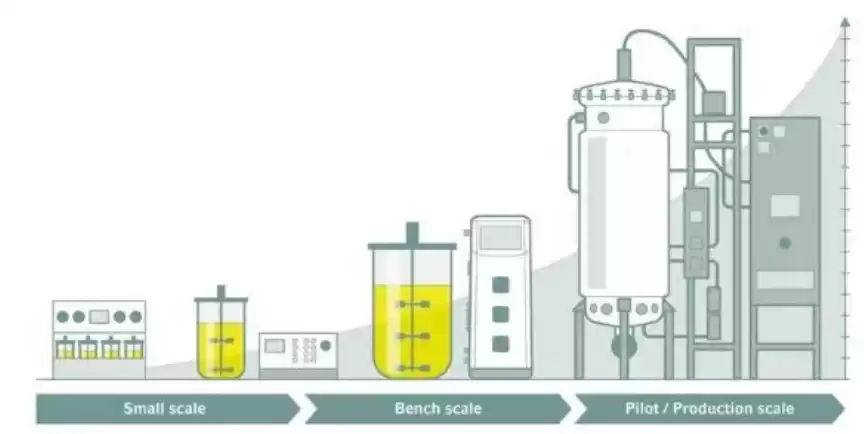
◆Key factors for scale down and scale up
Analysis of environmental conditions of small equipment and large equipment (as consistent as possible)
Chemical factors: matrix, precursor concentration, etc., can be kept constant under artificial control;
Physical factors: temperature, bacterial concentration, viscosity, pressure, power consumption, shear force, etc.
◆The process of scale up
In the first stage, on a laboratory scale, screening of bacterial strains and research on culture media are carried out.
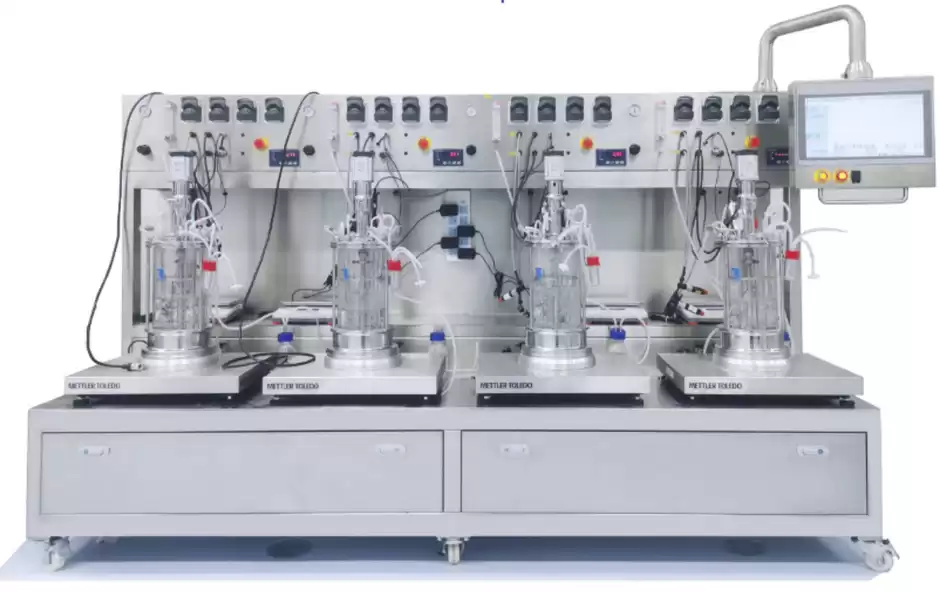
Figure 1 Laboratory bioreactor
In the second stage, the scale of the pilot plant is determined to determine the optimal operating conditions for bacterial culture.
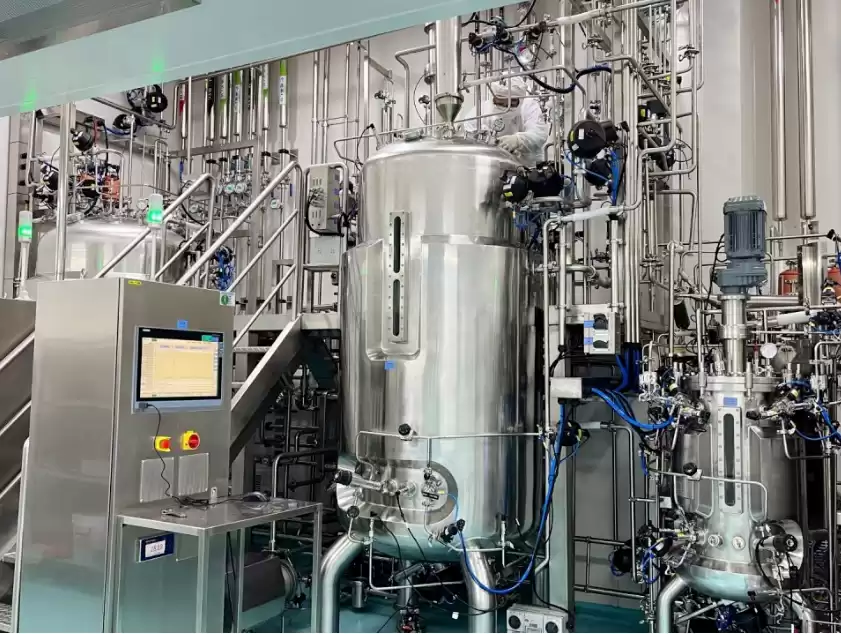
Figure 2 Pilot equipment
The third stage is mass production in factories.
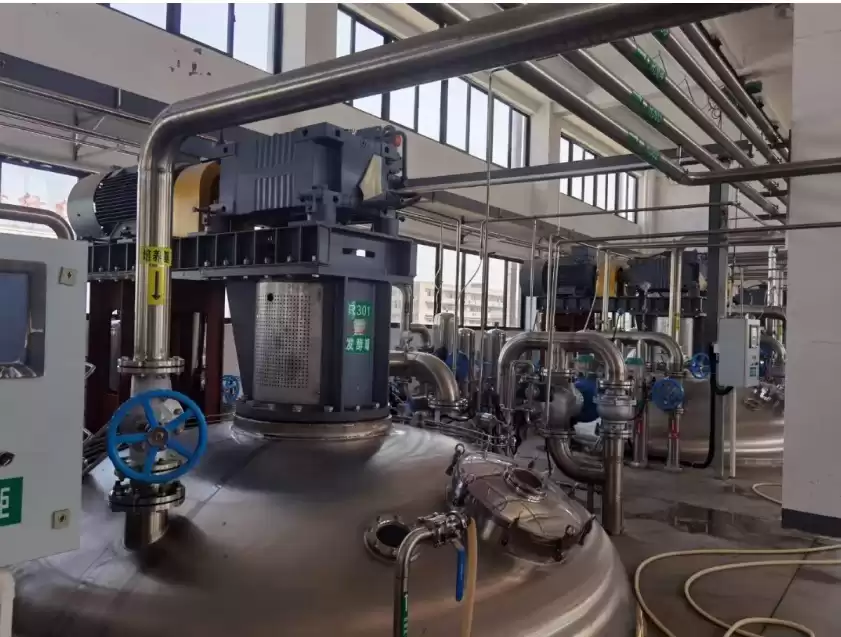
Figure 3 Large-scale production project
◆Principles and criteria for bioreactor scale up
Similar conditions that ideal reactor scale up should achieve:
1. Geometric similarity
2. Similarity in fluid mechanics
3. Thermodynamic similarity
4. Quality (concentration) similarity 5. Biochemical similarity
◆Bioreactor scale-up methods
•Experience magnification method
•Scale up and scale down method
•Dimensional analysis
•Mathematical modeling method
◆Design of aeration fermentation tank – experience amplification method
❶Geometric similarity amplification Scale up
according to the geometric size ratio of each component of the reactor. The amplification factor is actually the increase factor of the reactor.
❷Constant equal volume stirring power amplification
This method is suitable for biological fermentations that control the fermentation reaction by dissolved oxygen rate, non-Newtonian fluids with higher viscosity or cultures with high cell density.
❸Constant volume dissolved oxygen coefficient
amplification
This method is suitable for reactor amplification of Newtonian fluid and high oxygen consumption fermentation (bacterial fermentation, yeast fermentation) fermentation processes.
❹Constant stirring blade tip linear end speed amplification It is suitable for the amplification of fermentation processes where biological cells are significantly affected by stirring and shearing, such as the fermentation of filamentous bacteria. The linear end speed of the mixing blade tip (πDn) is the key to determining the mixing shear strength.
❺ Constant mixing time amplification Mixing time
refers to the time required from adding materials to the reactor until they are mixed evenly. In small reactors, it is easier to mix evenly, but in large reactors, it is more difficult.
❻ Air flow amplification
ⅰ Amplification based on the same principle of air flow rate per unit culture medium volume
ⅱ Amplification based on the principle of the same linear flow rate of air
ⅲ Amplify based on the principle of the same KLa value
Scale-up guidelines in the European fermentation industry
| Industrial application ratio(%) | The empirical amplification used |
| 30 | The power consumption per unit culture medium volume is the same |
| 30 | KLA constant |
| 20 | Stirring blade tip speed is constant |